
The Integrity of the Machine
Understanding the transition from physical labor to long-term legacy for the tradesmen who build the world.
There is a specific kind of pride that comes with a trade. Whether you are a millwright aligning a turbine to a thousandth of an inch, an electrician pulling wire through a complex industrial grid, or a welder laying a bead so clean it looks like a stack of dimes—you know your value. You see it in the machines that roar to life and the structures that pierce the skyline.
But there is also a reality that every craftsman eventually faces: Your body is a finite resource. You can maintain it, grease the joints with ibuprofen, and stretch out the kinks, but the clock is always ticking. The question isn't just "Can I do the job today?" It's "How long do I want my physical survival to be tied to my physical output?"
The smartest tool in the toolbox isn't the wrench or the torch—it's the mind that knows when to stop trading health for a paycheck.
⚙️ The Toll of the "Golden Handcuffs"
For millwrights and mechanics, the pay is often excellent. The overtime is seductive. You get used to the $100k+ lifestyle, the new truck, and the house. But these are often "golden handcuffs." You feel like you can't step away because your income is 100% dependent on your ability to climb a ladder, crawl through a crawlspace, or swing a sledgehammer.
The Heavy Duty Cost
Constant vibration, micro-tears in soft tissue, and the long-term impact of silica or metallic dust.
The Family Cost
Missed birthdays and weekends sacrificed to the "shutdown" schedule.
💰 Transitioning from Labor to Leverage
If you don't want to depend on your body forever, you have to start treating your career like a business enterprise. A business doesn't just work for today; it builds assets. Here is how the most successful tradesmen pivot before their knees give out:
⚡ The "Shift-Change" Mindset
In the field, we talk about "preventative maintenance." We do it for the pumps, the motors, and the panels. Why don't we do it for our careers? A career pivot isn't a sign of weakness; it's the ultimate preventative maintenance strategy to ensure your "machine" doesn't suffer a catastrophic failure in its 50s.
🎓 Knowledge is the Ultimate Tool
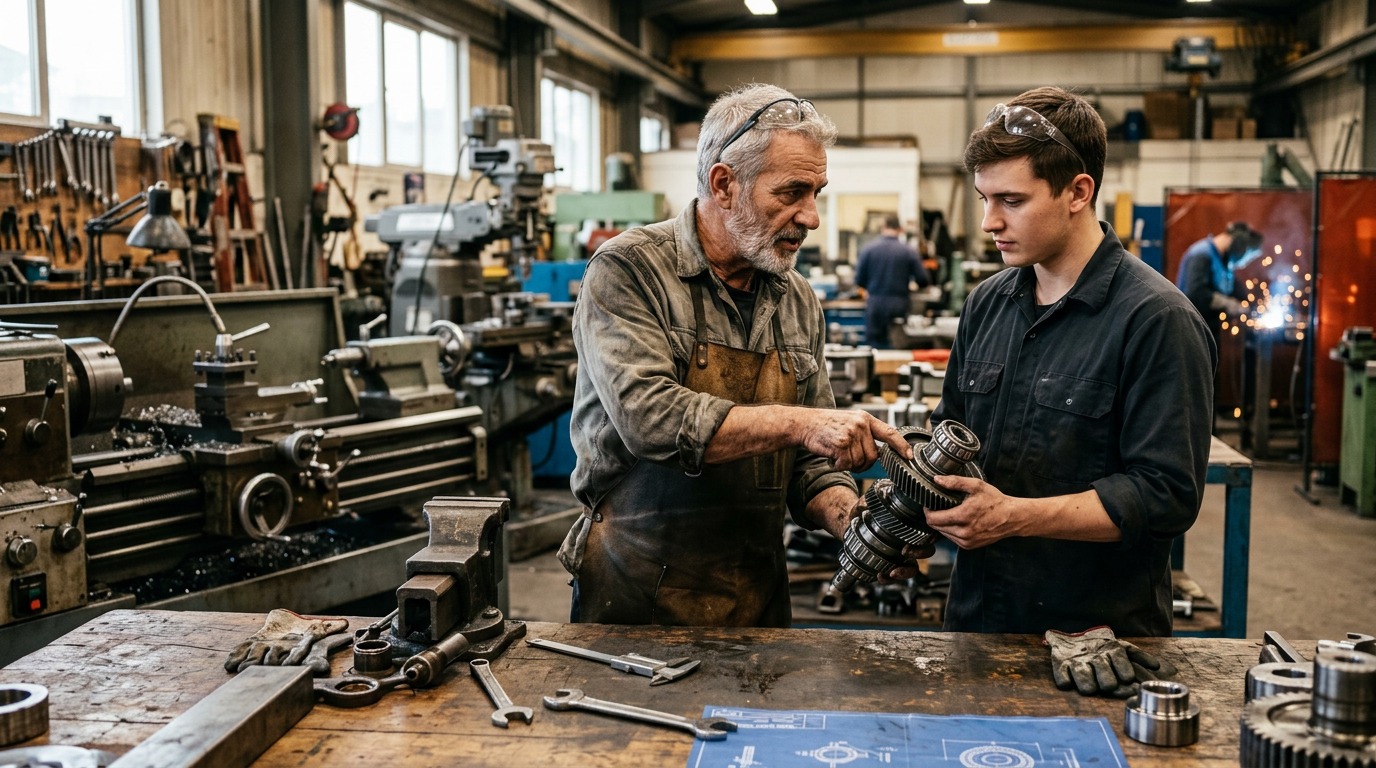
As a seasoned operator or construction worker, what you have between your ears is worth ten times what your hands can do. The industry is currently facing a massive "skills gap." Younger workers have the energy, but they lack the intuition that only comes from decades on the floor.
Teaching & Instruction
Community colleges and vocational schools are desperate for instructors who have actually lived the life, not just read the manual.
Consulting
Large firms pay top dollar for "Subject Matter Experts" to review blueprints or troubleshoot recurring mechanical failures.
🎯 The 5-Year Exit Strategy
Don't wait for an injury to decide your future. Start your exit strategy while you are still strong:
- ✅ Year 1: Identify your next move (Management, Inspection, or Business Ownership).
- ✅ Year 2: Obtain the necessary certifications or licenses for that role.
- ✅ Year 3: Begin networking and looking for "internal" moves within your company.
- ✅ Year 4: Maximize savings and pay down debts to lower your "survival" cost.
- ✅ Year 5: Make the leap—either into a new role or your own venture.
The Goal is Longevity
Your body has served you well. It has built the foundation for your family and your community. But the most impressive thing a tradesman can build is a life that doesn't require him to be "on the tools" until the day he retires. Work hard, but work smart—so that one day soon, the tools you pick up are the ones you want to use, not the ones you have to use.